
How to choose Solar Torches (10 tips)

Hello, here I am going to use a table and go through in detail step by step how to choose solar Tiki torches for outdoor. These battery lamps are a great outdoor lighting solution for evening gatherings with family and friends, as well as backyard theme parties.
Tiki Torches are solar powered, which saves energy and eliminates the need to run wires to an outlet. The lights are also low maintenance and have a long lifespan.
With the huge number of different designs and styles on the market, you can find products to suit every taste and requirement. I recommend my article best 5 torches 2024 to read the reviews and ratings to make an informed decision.
Let’s move on to look at the top 10 aspects to consider when choosing solar Tiki torches for back and front yard.
| № | Title | Description |
|---|---|---|
| 1 | Types of Solar Panels | Monocrystalline solar panels: – Pure silicon – Conversion efficiency: Up to 24% – Moderate expensive Polycrystalline solar panels: – Melted silicon crystals – Conversion efficiency: Up to 17% – Least expensive Thin-Film Amorphous Silicon solar panels: – Variety of materials – Conversion efficiency: Up to 10% – Portability, flexibility and lightweight – Most expensive |
| 2 | Design or Like Real Flame | Watch a video review of the models you like before buying so you don’t buy solar torches with flicker effect or dim light. |
| 3 | Battery type | I recommend choosing lithium-ion batteries – small size, light weight, resistance to memory effect, low self-discharge percentage and over 1000 charge cycles. |
| 4 | Assembly and Installation | Choose Tiki Torches with a sturdy construction and easy installation without the use of specialised tools. |
| 5 | Weather Resistance | To withstand rain and splashing water, choose IPX4 protection class. |
| 6 | Brightness and lighting range | To save battery power, choose luminaires with an automatic on/off function depending on the day or night |
| 7 | Colour control | If your budget allows, look for models with RGB colour lighting. Such lights are an incredible visual experience |
| 8 | Material and Durability | Choose stainless steel models with a UV protective layer. They will last longer than ABS plastic without becoming brittle or fading in sunlight. |
| 9 | Price | Strive for the best quality within a reasonable budget. Research the market, look at reviews and read customer testimonials. |
| 10 | Warranty | Make sure that there is a 1 year warranty or more so that your choice is backed by the manufacturer’s commitment. |
1. Types and Efficiency of Solar Panels
It is important to realise that they are not all the same and there are different types with different efficiencies and lifespans.
Good solar panels should have 3 main qualities:
- High conversion efficiency.
- Reliable protective coating.
- A long service life and warranty.

Here are 3 popular types:
A. Monocrystalline Solar Panels (Mono-SI)
Monocrystalline panels are made from high-quality silicon and have a high conversion efficiency – up to 24%. This makes them the most efficient among all available on the market today.
However, despite the high efficiency, the production of monocrystalline panels is more expensive than others, and the production process results in significant waste, leading to a high cost.
Key features:
- Conversion efficiency: Up to 24%
- Moderate expensive
B. Polycrystalline Solar Panels (p-Si)
Unlike monocrystalline, polycrystalline solar panels contain impurities in their crystalline structure, which reduces their efficiency.
However, the production of polycrystalline panels is more resource and energy-efficient, leading to a lower cost.
The drawback of this type is the requirement for more space compared to monocrystalline panels.
Key features:
- Conversion efficiency: Up to 17%
- Least expensive
C. Thin-Film Amorphous Silicon Solar Panels (A-SI)
These Thin-Film Amorphous Silicon solar panels are created by applying layers of amorphous silicon, making them efficient even in low sunlight conditions.
Drawbacks include their larger size and relatively low efficiency.
Key features:
- Conversion efficiency: Up to 10%
- Portability and flexibility
- Lightweight
- Most expensive
2. design or Looks Like Real Flame
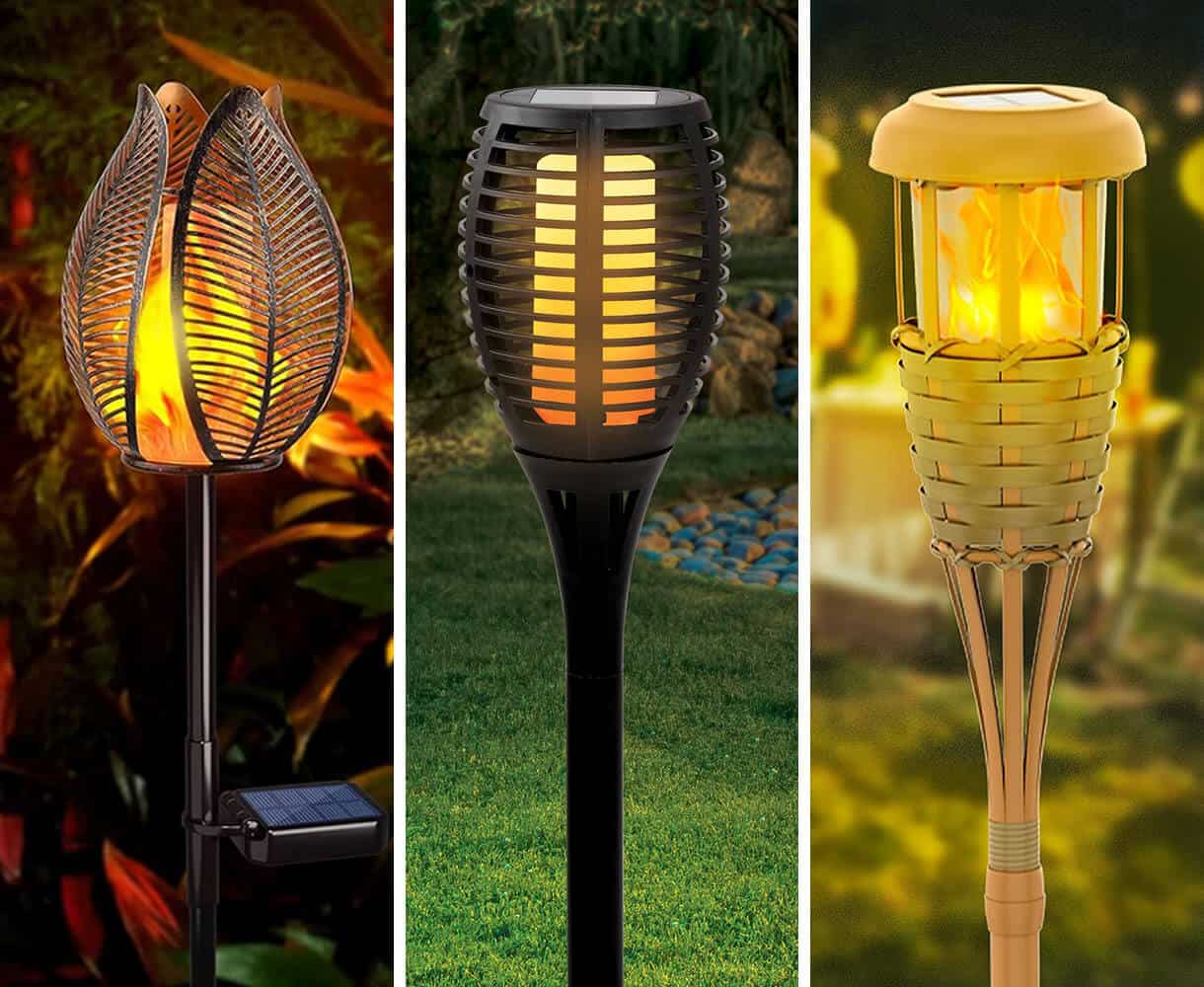
When choosing a solar torch for outdoor, for most people, the deciding factor is how much the light resembles a real flame.
Most of the models available on the market look impressive, as claimed by the manufacturers. However, some of them produce a flickering effect and look less realistic. Or models with dim light, pay attention to that too.
Therefore, I recommend watching a live video review of each model before purchasing to avoid making a mistake when buying battery lamps .
3. Battery Type
The type and capacity of the battery are the second most important factors after the type of solar panel to consider before purchasing.
Battery capacity is measured in mAh. Typically, the higher it is, the longer the battery will last. However, increasing capacity also increases charging time. It’s important to have a large-capacity battery, especially in winter when days are short.
When choosing a battery for solar lightings, it’s important to note that runtime significantly depends on the working voltage and capacity. For example, a lantern with 20 LEDs will deplete the battery much faster than one with 10 LEDs.
There are many types of batteries, but the most commonly used in the lighting industry are:
- Lithium-ion batteries
- Nickel-cadmium batteries
- Nickel-metal hydride batteries
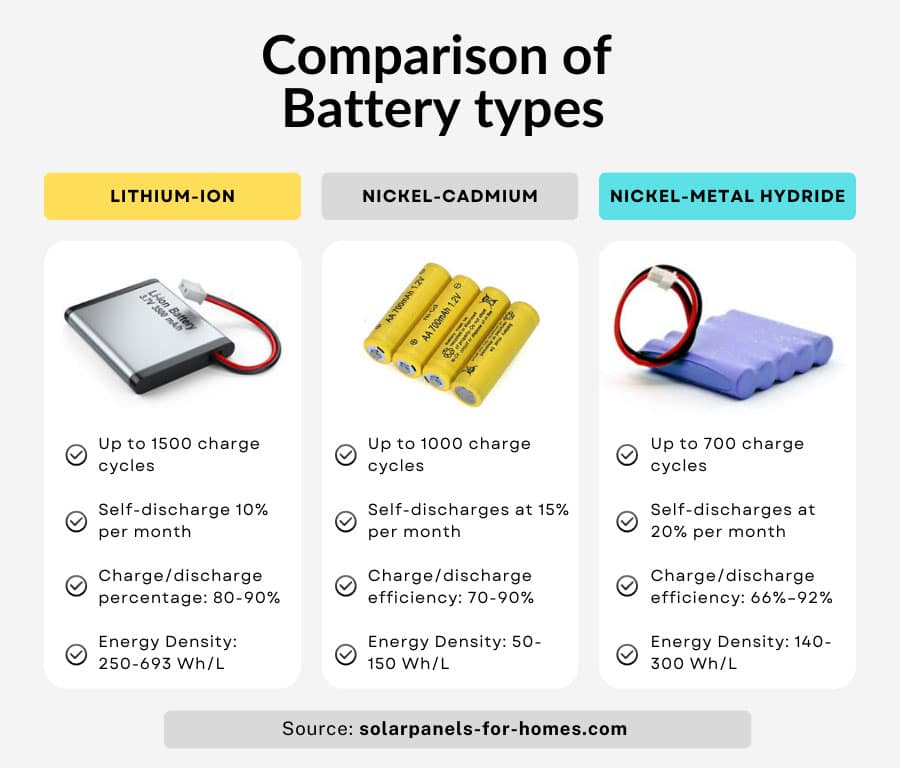
Here are the most common types of batteries for solar lanterns:
A. Lithium-ion batteries
Lithium-ion batteries are small, lightweight and, most importantly, have a very low self-discharge rate. In other words, these batteries can be stored for months and will not lose their charge.
The average lithium-ion battery has a charge/discharge efficiency of 85% and can last between 500 and 1500 charge cycles.
They are also resistant to the memory effect, meaning they don’t lose their charging capacity over time, which is very important, especially for solar lanterns, as there may be cloudy days when you won’t be able to fully charge the battery.
The only disadvantage of lithium-ion batteries is their high cost compared to other types of batteries.
Key features:
- 500-1500 charge cycles
- Fully charges in 1-4 hours
- Self-discharge 10% per month
- No maintenance required
B. Nickel-Cadmium Batteries
Second on the list are nickel-cadmium batteries. Unfortunately, this type suffers from the memory effect, so they don’t last as long as lithium-ion.
Don’t get me wrong, nickel-cadmium batteries are still a very good option as they can provide up to 1000 charge cycles before losing their capacity.
They are also much cheaper than lithium-ion batteries and typically cost 2-3 times less, making them a great choice for people on a tight budget.
Key features:
- Up to 1000 charge cycles
- Fully charges in 1-3 hours
- Self-discharges at 15% per month
- Requires maintenance every 1-2 months
C. Nickel-Metal Hydride Batteries
Nickel metal hydride batteries are another fantastic option that can provide 300-700 charge cycles with a charge/discharge efficiency of about 75%.
While this type of battery is typically heavier than others and has a high self-discharge rate, they are quite affordable and recyclable.
Key features:
- 300-700 charge cycles
- Fully charges in 2-4 hours
- Self-discharges at 20% per month
- Requires maintenance every 2-3 months
4. Easy assembly and installation
When choosing solar tiki torches, it is recommended to choose models that can be easily installed without the use of specialized tools.
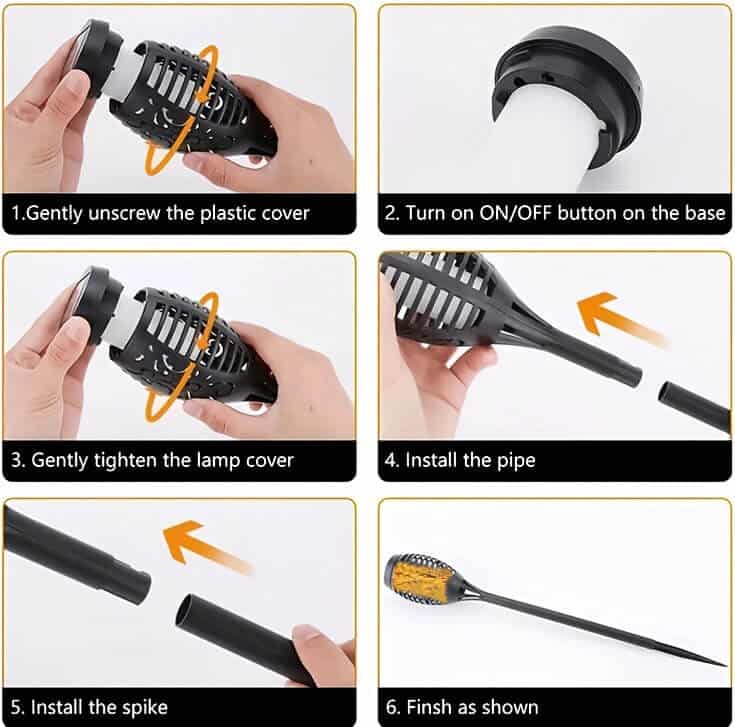
You should also look for lanterns that have a durable design for added strength and stability. This feature ensures long service life and resistance to weather changes.
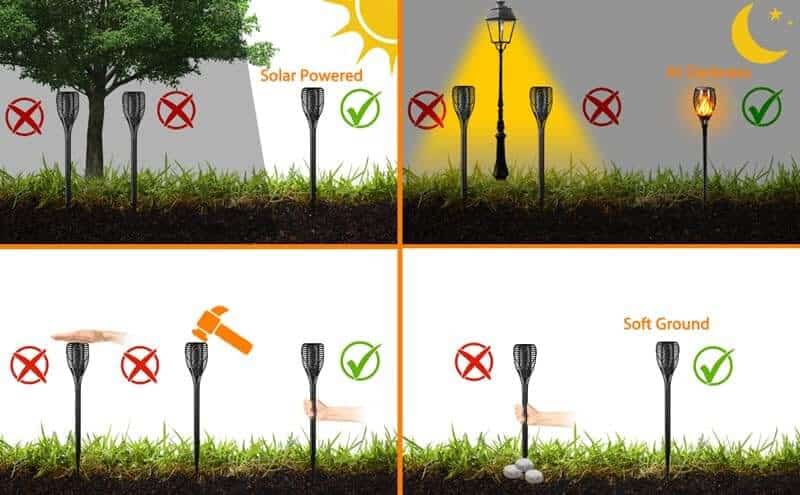
Additionally, it is advisable to choose lights that can be easily moved to different locations, allowing flexibility for use in different parts of the backyard or garden.
5. Weather Resistance
Solar torches for outdoor are meant to be outdoors, and for longevity, it’s crucial they are made from high-quality materials capable of withstanding any weather conditions in your area, whether it’s heavy rain, hail, or intense sun.
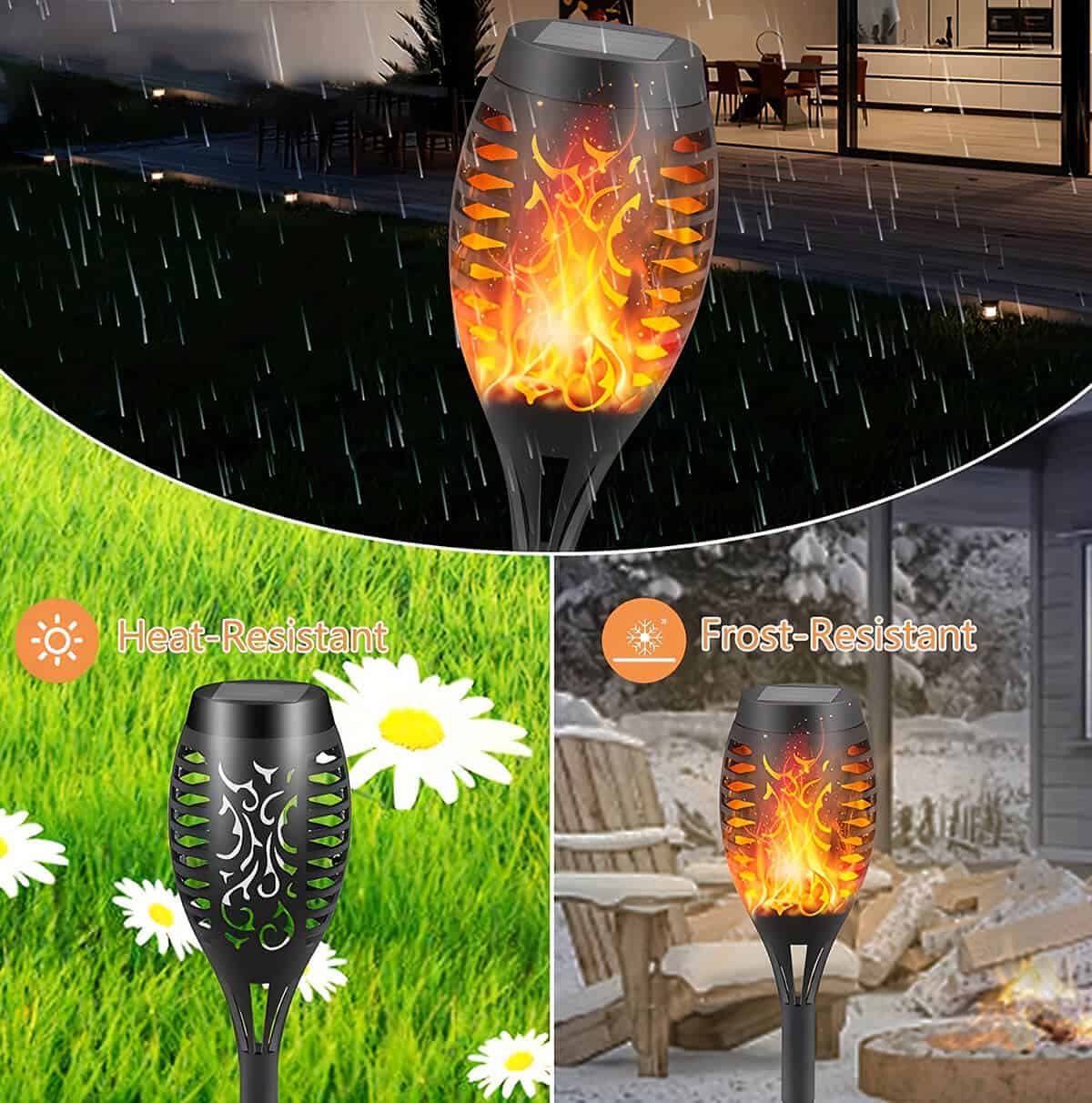
Preference should be given to solar-powered lights made of stainless steel, ABS plastic, and die-cast aluminum.
Additionally, it’s important for these battery lamps to have a high degree of water resistance and durability against atmospheric conditions. Checking the IPX rating (Ingress Protection) of each product becomes a key point.
The IP rating is an international standard that defines the level of sealing effectiveness of electrical enclosures against intrusion from foreign bodies and moisture. Here’s a brief guide to the most common IPX ratings and their level of water protection:
| IPX | Protection |
|---|---|
| IPX0 | No protection from water. |
| IPX1 | From vertical water drops, such as condensation. |
| IPX2 | Resistant to dripping water when tilted up to 15°. |
| IPX3 | Splashing water when tilted up to 60°. |
| IPX4 | Splashing water from any direction. |
| IPX5 | Against water jets from any direction. |
| IPX6 | Against strong jets of water and heavy gusts of rain. |
| IPX7 | Temporary submersion up to 1m or 3ft. |
| IPX8 | Against prolonged immersion greater than 1m or 3ft. |
For outdoor lighting like solar tiki torches, look for a high IP rating, ideally IPX4 or above, to ensure they can endure rain and splashing water without damage.
6. Brightness and lighting range
In my experience, battery lights should have different lighting modes.
For example, a dim mode is useful for creating a more calm and serene atmosphere, while switching to a bright mode provides more intense lighting.

I suggest choosing solar lights with an auto on/off feature, which allows them to react to light levels and automatically switch on at dusk and off at dawn using inbuilt sensors. This feature helps to save battery power.
7. Colour control
When choosing solar lights, I recommend paying attention to options with RGB color lighting choices. Multicolored lights provide an incredible visual perception and can be used to create original design solutions.
You can also combine white and colored lights to create attractive and sophisticated compositions.
8. Material and Durability
Most solar lanterns are made of ABS plastic, which is a quite reliable material capable of lasting 2-3 years without any issues.
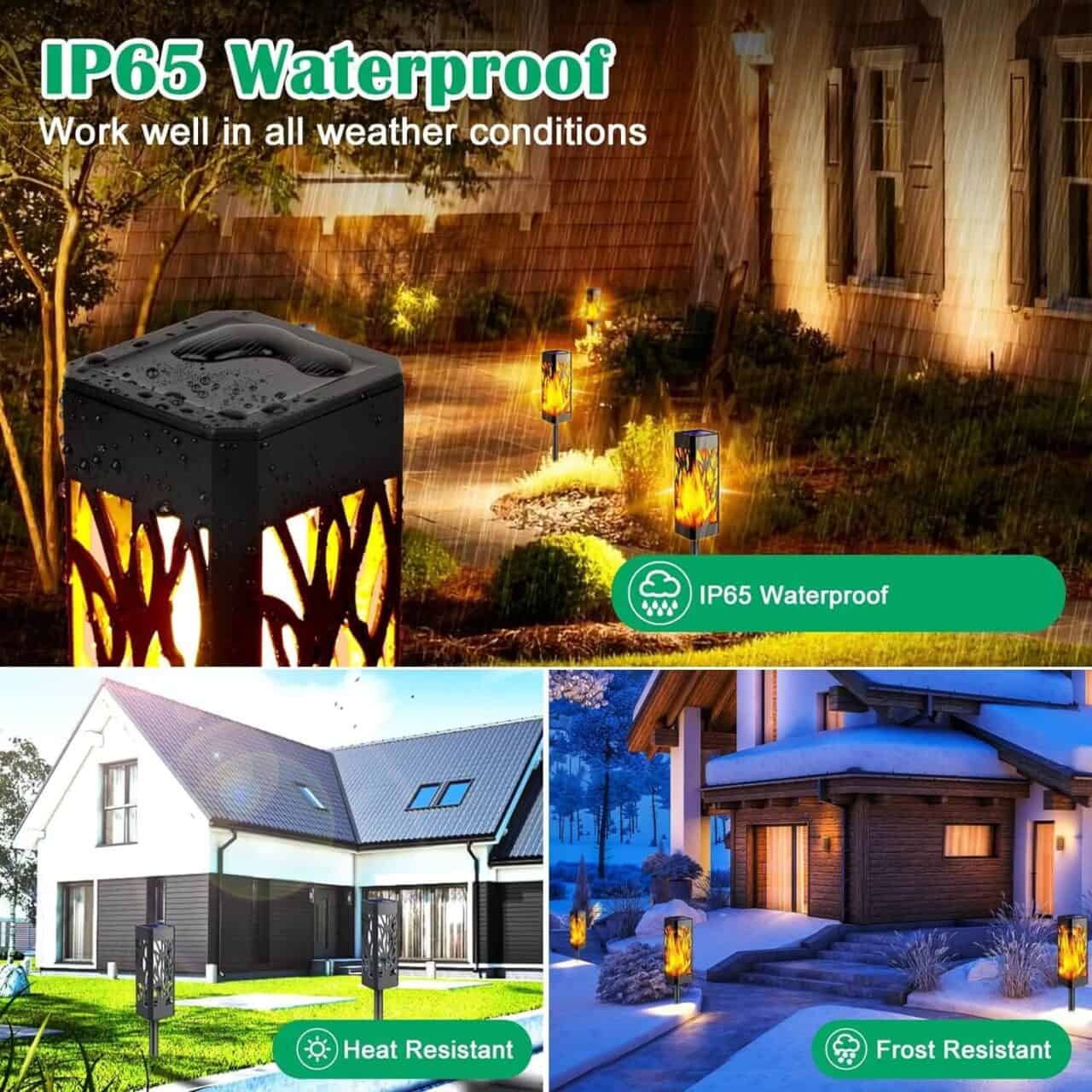
However, if you are concerned about longevity, it is recommended to look at models made of stainless steel with a UV protection layer. Such models are a bit more expensive, but you can be assured that they will last much longer, resisting brittleness or fading under the sun’s rays over several seasons.
9. Price
When choosing solar Tiki torches, pay special attention to the various features that can affect their price. Light intensity, materials used, run time versus charging time, battery capacity – all of these factors can vary and affect the final price.
The best solar Tiki torches don’t always mean a high price. Some companies may inflate prices in an attempt to create the illusion of excellence in their product.
My advice: strive for the best quality within a reasonable budget. Research the market, look at reviews and read customer feedback. Сhoose products with satisfactory features that meet your needs, and stay within your budget.
10. Warranty
Another important aspect is the warranty. It is not advisable to buy products without a warranty.
Think about it: if the manufacturer is not confident enough in their product to offer at least 1 year warranty, why should you trust them? Make sure there is a warranty so that your choice is backed by the manufacturer’s commitment.
Conclusion
As promised, I have provided you with a detailed guide on how to choose solar Tiki torchers for outdoor, considering the wide variety of lights available in the market.
Now you know what to look for when choosing:
- Type of solar panel
- Design
- Type of battery
- Assembly and Installation
- Weather resistance
- Brightness and lighting range
- Colour control
- Quality of materials
- Price
- Warranty
I hope this article will be useful to you in the future.
If you have questions or ideas, please share them in the comments! I will definitely read and respond to each of your reviews.